
Building the Engine Room of Design Excellence
I created operations, governance, and culture systems that enabled design teams to scale without losing quality—achieving 100% team feeling informed by leadership and 83% feeling they can be authentic at work.
THE CHALLENGE
Great design doesn't happen by accident—it requires intentional systems, clear standards, and strong culture. I've seen talented designers produce inconsistent work because there were no shared principles. I've watched teams scale and lose their identity when leaders focused on headcount rather than culture. And I've experienced the chaos of multiple teams working in silos, duplicating work and creating fragmented experiences.
UX operations isn't glamorous, but it's what separates high-performing teams from collections of talented individuals who never quite gel.

MY APPROACH TO UX OPERATIONS
Creating vision and principles that inspire and align
Teams need to know what they're building toward and how to make decisions when leaders aren't in the room. I don't create visions in isolation—I run workshops with the team so they're invested from the start.
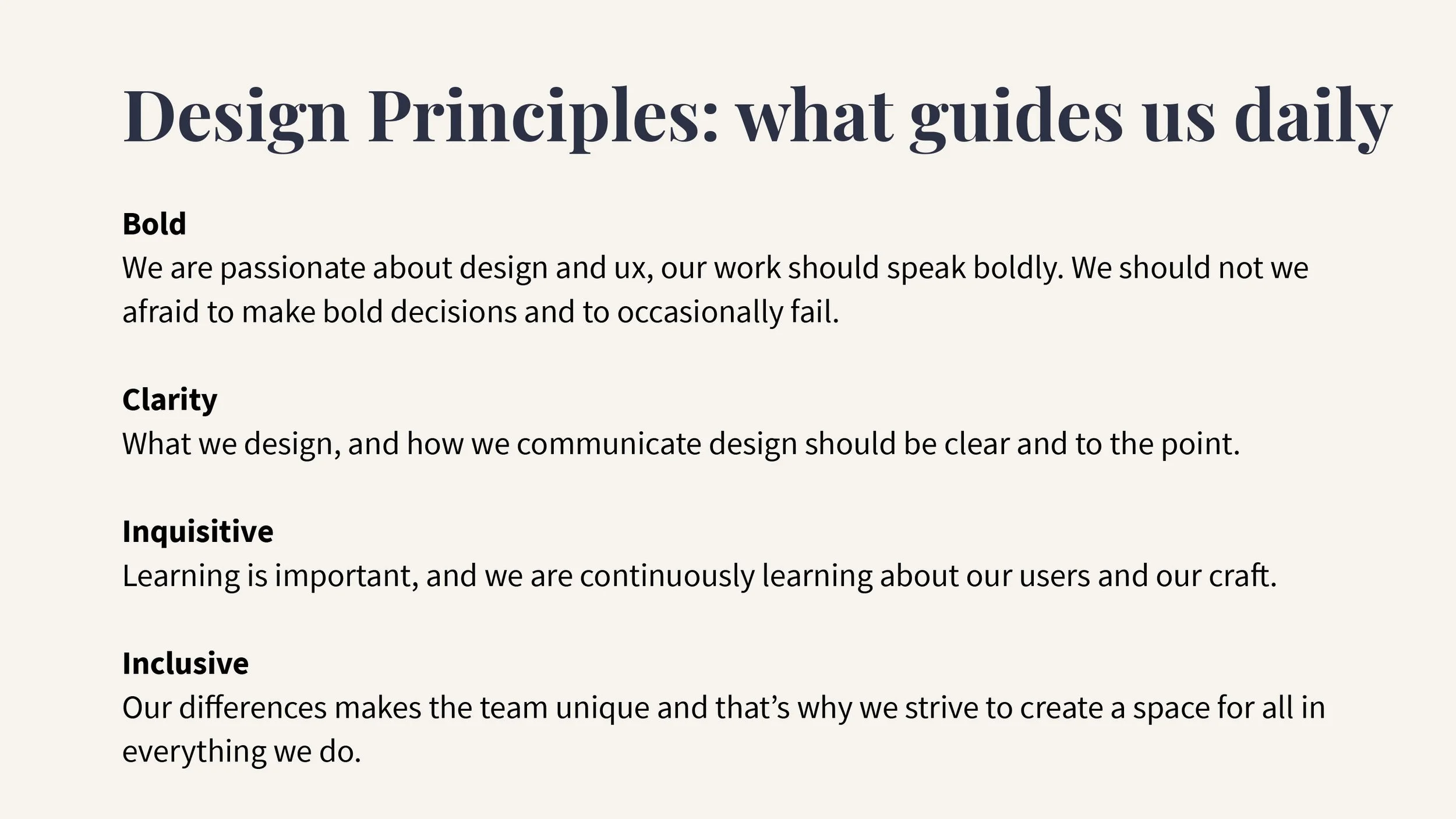
At Cazoo, we developed UX vision and design principles through collaborative workshops with agile coaches. The result: "Be an industry-leading UX team that Designers and Researchers feel proud to belong to." This wasn't corporate speak—it guided hiring, influenced how we ran critiques, and became the standard we held ourselves to.
Design principles need to be memorable, used regularly in design critiques, and accessible to non-designers. If engineers and PMs can't remember them, they won't influence decisions.

Establishing design governance that maintains standards without killing creativity
I've implemented design roundtables—spaces where designers bring work at any stage to gather peer feedback, highlight overlaps, and ensure adherence to systems and processes. These aren't approval gates—they're collaborative sessions run by principal designers that maintain quality while respecting designer autonomy.
For design systems, I've led teams to:
Create comprehensive component libraries aligned with what's actually in production (not aspirational systems no one uses)
Run regular sessions with engineers to ensure design-dev alignment
Document patterns in tools like Storybook so standards are accessible, not buried in Figma files

Building research governance that scales insights
Research without systems becomes tribal knowledge that leaves when people do. I've established:
Research roadmaps that track and document all planned and in-progress research across domains
Research repositories that product managers and designers use to inform hypotheses without redoing studies
Research insights Slack channels that publicise findings to wider audiences in real-time


Creating culture where designers thrive
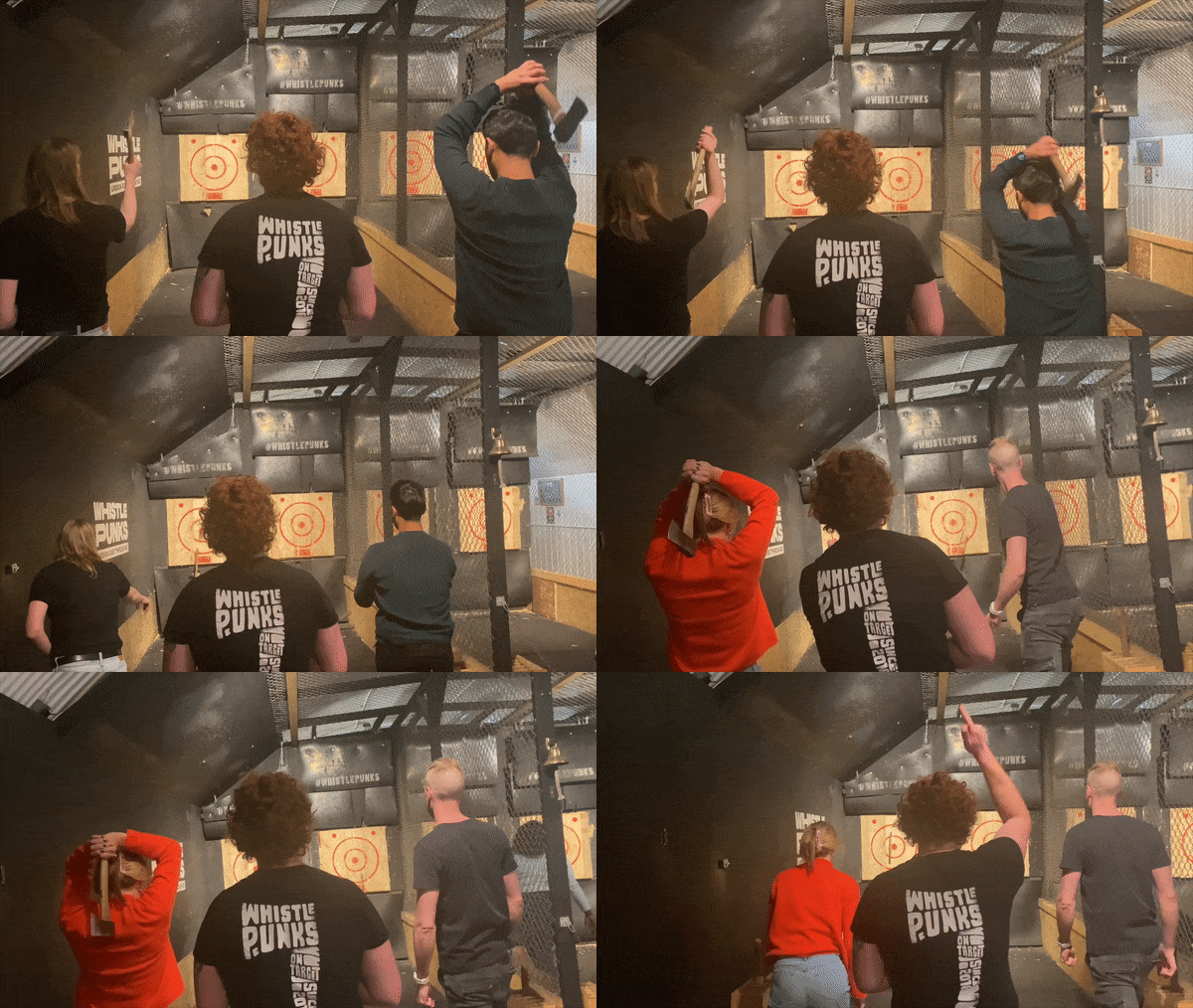
Good vibes aren't accidental—they're the result of intentional systems:
Regular retros facilitated by agile coaches for honest feedback
Skip levels and 1:1s with every team member (not just direct reports)
Quarterly team socials and monthly all-hands to share stories
Celebrating success through Friday Big Ups and quarterly highlights
I also measure what matters:
Monthly team health surveys to track sentiment
Transparent reporting of results in UX all-hands
Leadership roadmap that shows the team what I'm working on
The Impact
Culture Metrics
100% of team feel informed by leadership
83% feel they can be their authentic self at work
83% feel respected at work
34% higher line management scores compared to company average (Cazoo)
Highest retention rate across entire tech division (Cazoo)
Operational Excellence
Design principles used regularly in critiques and decision-making
Design system adoption across all product teams
Research repository prevented duplicate studies and saved hundreds of hours
Design roundtables improved consistency across 11+ product teams
Team Development:
Career frameworks created clear growth paths and improved retention
Skills matrices identified gaps and informed hiring decisions
Regular design community events strengthened craft and collaboration
What Makes UX Operations Work
Culture is strategy
High-performing teams don't burn people out. The 34% higher management scores and industry-leading retention at Cazoo weren't accidents—they were the result of investing in people, transparency, and creating space for designers to do their best work.
“Venessa is a fantastic product leader who always brings positive vibes and energy to create a motivating work environment.”
— Vikram, Senior Product Manager
Governance should enable, not gatekeep
Design roundtables work because they're collaborative feedback sessions, not approval committees. When governance feels like support rather than bureaucracy, designers engage rather than work around it.
Systems scale, heroics don't
Early-stage companies run on individual effort. Scale requires systems. Research repositories, design roundtables, career frameworks—these aren't overhead, they're what make it possible to double a team without halving quality.

Measure and share transparently
Monthly health surveys and transparent reporting build trust. When teams see that leadership tracks their wellbeing and acts on feedback, they believe leadership actually cares.