
Scaling Global UX Across Five Markets
Role: Global Director of UX
Timeline: Nov 2023 - Present
Sector: LegalTech
I led the transformation of a fragmented legal software suite into a unified global platform—driving 85% increase in daily active users, 4% quarterly sales growth, and establishing the company's first global UX research function.

THE CHALLENGE
Fragmentation Threatening Scale
Dye & Durham had grown through acquisition, resulting in a patchwork of products across five markets with no consistent UX strategy. Each region operated independently, with its own standards, processes, and approaches.
As the company prepared for aggressive growth targets, this fragmentation threatened our ability to scale efficiently or deliver on the promise of a modern, AI-driven platform. We needed to unify without losing the regional expertise that made each market successful.
MY ROLE
Leading Global UX Strategy
As Global Director of UX (Nov 2023 - Present), I lead UX strategy and execution across Canada, the UK, and Australia, working directly with Product and Engineering directors to shape product vision and establish design as a strategic function.
THE APPROACH
Strategic Moves That Shaped Outcomes
Established a global UX research function from scratch
Without centralised research, product decisions were being made on intuition rather than insight. I built a research practice that operates across time zones, creating shared repositories and asynchronous processes that keep distributed teams aligned. This upstream work now informs product strategy rather than just validating features after they're built.

Created a Customer BETA program to de-risk launches
Rather than building in isolation and hoping for adoption, I implemented a structured BETA program that brings customers into the development process early. This gave us crucial feedback that shaped our go-to-market plans and prevented costly post-launch pivots. The program has become a competitive advantage in how we build trust with clients.
Developed a unified platform vision across the product suite
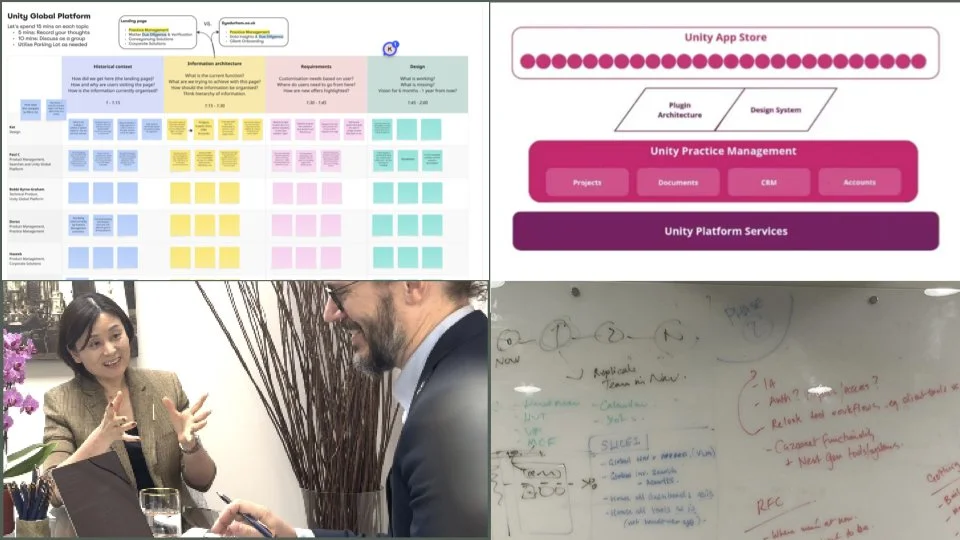
Ten years of acquisitions meant customers were managing multiple logins, inconsistent interfaces, and disconnected workflows. I led the team to develop a north star vision for one integrated platform that consolidates the entire D&D suite. This wasn't just a design exercise—it required executive alignment, technical architecture changes, and careful sequencing to avoid disrupting existing customers.
THE IMPACT
Measurable Business Results
Business Metrics
4% quarterly increase in sales
85% increase in daily active users through AI-driven features
200% increase in search volumes
Annual Recurring Revenue up 74% to $136.7 million
Our design concepts directly contributed to the FY25 company strategy
Team & Operational Impact
Established a global UX research function operating across three countries
Implemented asynchronous design processes that improved distributed team productivity
Created a career framework that significantly improved retention and growth
Customer BETA program now core to our product development approach
WHAT MADE IT WORK
Key Learnings
Global doesn't mean one-size-fits-all
Creating a unified platform vision required respecting regional differences while establishing shared standards. I spent as much time listening to regional teams as I did creating frameworks. The vision works because it reflects their expertise, not just my perspective.
Research positioned strategically pays dividends
Building a research function from scratch gave us the opportunity to position it correctly from day one—as a strategic partner, not a validation service. This upstream positioning is why our BETA program works and why design now has a seat at the strategy table.
Distributed teams need different processes
What works for co-located teams fails across time zones. Implementing asynchronous design reviews, decision documentation, and clear handoff protocols wasn't just about productivity—it was about building trust and ensuring no one felt like a second-class contributor because of their location.