
Turning Strategic Vision Into Measurable Outcomes
Role: Head of UX
Sector: Automotive
I co-created product vision and strategy that consolidated 10+ tools, drove 32% increase in contribution margin, and reduced logistics failures by 76%—proving that design thinking shapes business direction.

THE CHALLENGE
Creating a seamless experience
At Cazoo, Operations was the engine room of the business—logistics, customer service, and site operations all running on 10+ disconnected tools built over years of rapid growth. Our internal users rated tooling 3/10. Returns were increasing, costing thousands. Cycle times stretched over seven days to process new cars. And the business was relying on throwing more people at problems instead of using technology to scale.
The Operations Domain needed a north star—a vision that could guide consolidation, prioritisation, and investment decisions across multiple product teams.
MY ROLE
Working together as a trio
As Head of UX, I collaborated with the Head of Product and Head of Engineering to create vision and strategy for the Operations Domain that supported the business goal to improve margin contribution.
THE APPROACH
Visualising the vision
Developed a clear, rallying vision
"Our vision is to transform the car-buying experience by delivering seamless and memorable customer experiences while keeping costs low."
This wasn't just aspirational—it gave teams a framework for making decisions. Does this feature reduce costs? Does it improve the customer experience? If not, it's not part of the vision.

Diagnosed the real problems through research and data
Working with researchers, I identified the core challenges:
Broken, costly processes
Users rated tooling 3/10; returns costing thousands
Long cycle times
Over 7 days to process cars (when competitors did it in 3)
Visualised the future to align stakeholders
Developed principles to guide product development
Created a phased roadmap of initiatives

Underutilised fleet
Optimisation could reduce costs by 30%
Defined how we win
People-dependent scaling
Manual processes across the network that couldn't scale
We win by using technology to reduce costs and meet demand through:
Enhanced visibility: Real-time insights for proactive decision-making
Reduced operational costs: Minimise human error and allocate resources strategically
Customer satisfaction: Identify and address issues before they impact delivery
Scalable growth: Accommodate expansion without proportional cost or headcount increases
Data-driven decisions: Continuously improve through analytics
Created a clear strategy to get there
Three strategic pillars guided all product work:

Consolidate tools, systems, and data sources

Adopt standardised user experience

Identify cost-cutting opportunities
My team created a "Future of Operations" story that demonstrated how the operations space could work for users. We showed specific workflows—planning, executing, reporting—in the target state. This wasn't conceptual design; it was a concrete vision that Product, Engineering, and Business stakeholders could rally behind.
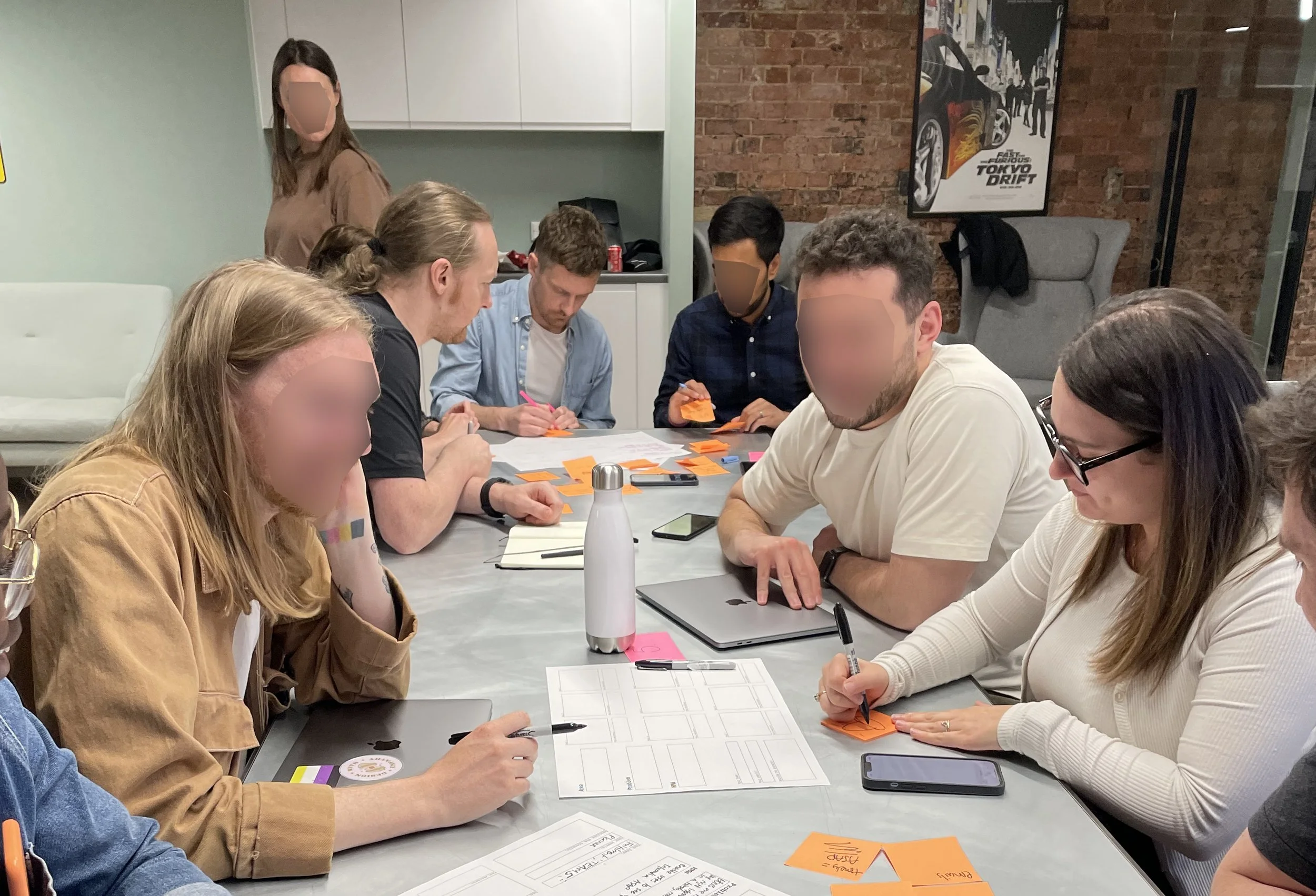
In collaboration with Product Designers, Product Managers, and Engineering Managers, we ran "How Might We" workshops, mapped common themes, and cross-referenced with research insights.
The principles that emerged:
Interconnected: Systems that talk to each other (vs. 10+ siloed tools
Intelligent: Systems that adapt based on context (vs. rigid workflows)
Frictionless: Systems users can trust to support them (vs. fighting tooling)
I worked with team leads to create a roadmap that:
Identified teams involved in each initiative
Allowed us to slice and phase delivery to avoid big-bang launches
Started with consolidating dashboards under one platform as Phase 1
Built the Target Product Experience (TPE)
Leading a cross-functional team (Principal Designer, Lead Researcher, Senior PM, Architect), we created a streamlined workflow experience across the domain:
Planning and monitoring (desk-based)
Executing tasks (field-based)
Reporting (desk and field)
This single curated view allowed users to focus on tasks without context-switching across multiple tools.


The Impact
Business Outcomes
32% increase in contribution margin through new driver warranty feature
76% reduction in logistics failures through centralized exception reporting
£1000s saved in licensing costs by decommissioning two legacy platforms
30% improvement in operational efficiency through consolidated workflows
Increased data accuracy through single source of truth
Product & Strategic Impact
Unified multiple operations dashboards under one platform
Teams gained end-to-end ownership of value streams
Established framework that guided product decisions across 11 teams
Vision directly informed company OKRs and investment priorities
Principles used daily in product discussions and design reviews
User Impact
Internal user satisfaction improved from 3/10 to strong positive sentiment
Cycle times reduced from 7+ days to industry-competitive timelines
Field workers could complete tasks without switching between 4-5 apps
Real-time visibility into inventory location and status
What Made This Work
Vision without strategy is just hope
Creating an inspiring vision is easy. Creating the concrete strategy—consolidate, standardize, provide visibility—is what turns vision into reality. The roadmap, principles, and phased approach made the vision actionable.
Co-creation builds ownership
I didn't create this vision in isolation. By involving Product Designers, PMs, and Engineering Managers in workshops and principle development, they became champions rather than skeptics. People support what they help create.
Visualisation beats documentation
Showing stakeholders what the future looks like through story-driven design resonates far more than strategy decks. The "Future of Operations" stories got buy-in because people could see themselves in the solution.
"Simple to use, I've been on it 5 minutes and I know where I'm going."
Team Lead
Principles guide decisions when leaders aren't in the room
"Interconnected, Intelligent, Frictionless" became shorthand for product quality. When teams had to make trade-offs, these principles guided decisions consistently across 11 product teams without requiring constant management oversight.
Start with consolidation, not innovation
The tempting move would have been to build shiny new features. Instead, we consolidated existing tools first. This delivered immediate value—fewer logins, consistent UX, reliable data—and created the platform for innovation later.